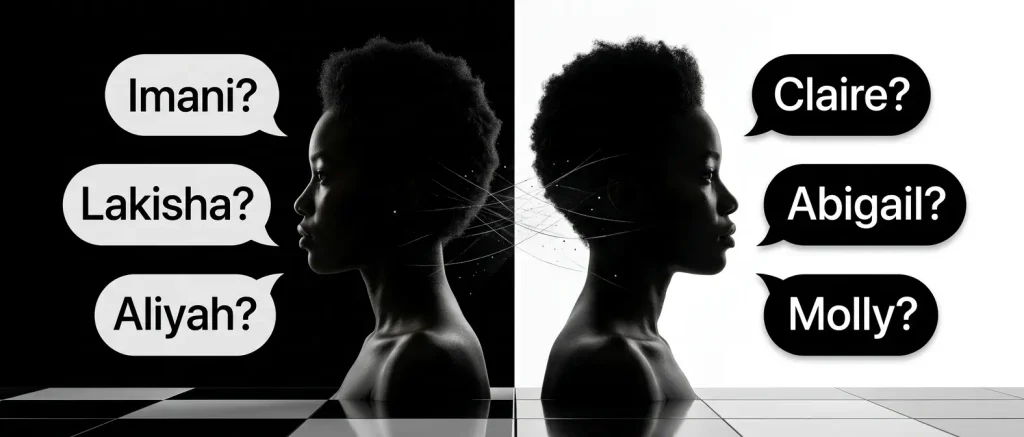
Racist names for Black people include racial slurs, derogatory labels, stereotypical character names, and ordinary personal names that acquired racist meanings through historical use. They did not all begin in the same way. Some were created as insults, while others were genuine African or European names that became racialized through slavery, minstrelsy, segregation, literature, advertising, and popular culture.
That distinction is important when researching names. Cuffee and Quashee, for example, have documented connections to West African naming traditions, even though both later became generic racial labels in parts of the Black diaspora. Rastus was a personal name associated with Erastus before it became a stereotypical Black character name. Jim Crow began as a blackface character and later became the name for a system of racial segregation.
This guide examines the history of these terms without treating them as ordinary baby-name suggestions. Severe slurs are censored where possible, while historically important names and stereotype labels are discussed for educational purposes.
What Does “Racist Names for Black People” Mean?
The phrase can refer to several different linguistic categories:
- Racial slurs: words specifically used to insult or demean Black people.
- Racial epithets: labels applied generically to members of a racial or ethnic group.
- Stereotype names: names associated with exaggerated racist character types.
- Minstrel character names: fictional names popularized through blackface entertainment.
- Racialized personal names: genuine names that acquired derogatory meanings through repeated historical use.
- Colonial racial terms: words whose meanings changed through colonial and apartheid-era usage.
These categories should not be mixed together.
A genuine personal name does not become inherently racist simply because it was once used as a racial stereotype. Likewise, a fictional stereotype does not automatically become a traditional Black personal name.
The distinction is central to onomastics, the study of names.
The Most Important Distinction: Name vs. Racial Epithet
A personal name identifies an individual. An ethnic epithet is a label used to refer to people as members of a racial or ethnic group.
Research by Irving L. Allen in the journal Names examined historical American ethnic epithets and found that about one in six of the terms in his collection was formed from a personal name. He identified names used as generic labels for multiple ethnic groups, showing that turning personal names into stereotypes was a broader linguistic phenomenon, not something unique to Black Americans.
For Black people, Allen documented names including:
- George
- James
- Leroy
- Moses
- Mandy
- Cuffee/Cuffy
- Quashee
- Rastus
- Sambo
- Sapphire
Their histories are not identical.
Some were ordinary names, African-origin names. Some came from fictional characters. Others became stereotypes because outsiders associated particular names with enslaved people or Black communities.
That is why it is inaccurate to create a simple list called “Black racist names” without explaining the history behind each one.
The N Word: The Most Notorious Anti Black Slur
The most infamous anti-Black slur in English is commonly referred to as the N-word.
Because of its severity, this article does not need to reproduce the full slur repeatedly. Historical and educational sources describe it as a term used to demean, intimidate, and dehumanize Black people. The ADL traces its use in colonial America and explains how it became embedded in systems of racial discrimination and violence.
Recent academic research also emphasizes that the N-word has a particularly painful history in American society and that discussing it in classrooms or other educational settings requires care.
Is the N word a personal name?
No.
It is a racial epithet, not a personal name. Its inclusion in a search about “racist names” is therefore a matter of search intent rather than onomastic classification.
That distinction makes the article more accurate.
Cuffee or Cuffy
Cuffee and Cuffy are among the clearest examples of a genuine African personal name becoming a racialized label.
Name type: Historical personal name and later ethnic epithet
Origin: West African naming tradition
Historical association: Black men in colonial America
Allen’s research records Cuffee/Cuffy as a name used for Black people from the eighteenth century into the nineteenth century. He connects it to a West African day-name tradition in which Cuffee referred to a male child born on Friday.
This means that calling Cuffee “a racist name” without qualification would be misleading.
Its original naming history and later racialized usage are separate facts.
Why Cuffee matters
Cuffee demonstrates how colonial societies could take an existing African naming tradition and transform the name into a generic label for an entire population.
For a named researcher, that is more informative than simply listing the term as an insult.
Quashee or Quashy
Quashee, also recorded with variant spellings, has a similar history.
Name type: Historical African personal name
Origin: Ashanti/Akan naming tradition
Historical association: Later racialized label for Black men
Allen records Quashee as an Ashanti day name for a male child born on Sunday. He also records its later use as a generic term for Black men and notes a later variant, Squasho.
Again, the name’s original meaning should not be confused with its later derogatory use.
The important lesson
Quashee is not evidence that an African personal name is inherently racist.
It is evidence of semantic change caused by social and racial history.
Rastus
Rastus is another important example of a personal name becoming racialized.
Name type: Personal name and later stereotypical character name
Related name: Erastus
Historical context: Nineteenth- and twentieth-century American popular culture
Allen’s historical study records Rastus as a nickname associated with Black people in the nineteenth century and notes that its association was strengthened by popular entertainment, including the 1896 song “Rastus on Parade.”
Rastus therefore should not be described simply as a “racist name.”
Its history is:
personal name → racial association → stereotype
That process is one of the most important naming patterns in this subject.
Sambo
Sambo became a major racial stereotype in American and European popular culture.
Name type: Historical name/character label and racial stereotype
Historical association: Black male caricature
Etymology: Uncertain
The etymology of Sambo should be treated cautiously. Allen reports that it possibly derives from a personal name found in several West African languages, but the source does not establish one definitive origin.
That uncertainty should remain visible in a trustworthy names article.
The later stereotype, however, is well documented. The Smithsonian includes Sambo among the broader tradition of racist caricatures and explains how such representations helped reduce Black people to simplistic and degrading character types.
Jim Crow
Jim Crow is one of the best-known examples of a fictional character name developing into a much larger racial term.
Name type: Fictional character name → racial epithet → historical political term
Historical figure: Thomas Dartmouth Rice’s blackface character
Major later meaning: racial segregation in the United States
Allen records that Thomas D. Rice popularized Jim Crow through his 1828 blackface song and dance. The character’s name later became associated with racial segregation and the Jim Crow system.
This history demonstrates why names can acquire meanings far beyond their original context.
Is Jim Crow a personal name?
Not in the modern historical sense relevant to this topic.
It is primarily important as a character name and historical racial term.
Uncle Tom
Uncle Tom began as the name of the central character in Harriet Beecher Stowe’s 1852 novel Uncle Tom’s Cabin.
Name type: Literary character name
Original source: Harriet Beecher Stowe’s novel
Later usage: Racialized insult
The later stereotype portrays an African American as submissive to white authority and overly concerned with white approval.
The Smithsonian emphasizes that the modern stereotype should be distinguished from Stowe’s original literary character. The character in the novel is a much more complex figure than the later stereotype suggests.
This is an important editorial correction because simply defining Uncle Tom as “a racist Black name” erases its literary origin.
Sapphire
Sapphire has an independent history as a personal name and a gemstone word. Its racialized meaning developed separately.
Name type: Established personal name + later stereotype label
Historical association: Stereotype of an angry or domineering Black woman
The Smithsonian traces the Sapphire stereotype through nineteenth- and twentieth-century popular culture and notes its later association with the character Sapphire Stevens in Amos ‘n’ Andy.
Therefore:
Sapphire is not inherently a racist name.
The racist meaning belongs to a particular cultural stereotype.
That distinction is especially important because Sapphire continues to be used as a genuine given name.
Mammy
Mammy is better classified as a racial stereotype label than as a conventional personal name.
The stereotype portrayed Black women, particularly formerly enslaved or domestic workers, as devoted, cheerful, loyal servants and caregivers within white households.
The Smithsonian explains that the stereotype developed during slavery and became widespread after the Civil War through minstrel performances, advertising, consumer products, literature, and film.
The stereotype was not a neutral description of real Black women. It helped create a romanticized picture of slavery and domestic service.
Aunt Jemima
Aunt Jemima became one of the most recognizable commercial versions of the Mammy stereotype.
The Smithsonian notes that the character was popularized commercially from the late nineteenth century, including through the use of Nancy Green, a real-life cook who portrayed the character at fairs and exhibitions.
This is a useful example of how a personal-style name can become attached to a commercial racial caricature.
Mandingo and the “Black Buck” Stereotype
Mandingo requires especially careful treatment because the word has a genuine ethnic and historical connection that is separate from its later racist stereotype.
The Smithsonian explains that the “Mandingo” or “Black Buck” stereotype portrayed Black men through exaggerated ideas about physical strength, sexuality, and animalistic behavior. It developed within racist representations surrounding slavery and later racial violence.
Is Mandingo a racist personal name?
No.
Mandingo is connected to the Mandinka/Mandingo people of West Africa. Using the name of an African ethnic group as though it were inherently a racist personal name would itself erase its cultural history.
The racist element belongs to a specific stereotype created by outsiders.
Zip Coon
Zip Coon is another important blackface-era stereotype.
Name type: Fictional minstrel character
Historical context: Nineteenth-century blackface entertainment
Unlike Cuffee or Quashee, Zip Coon was not simply an African personal name that became racialized. It belonged to a stock character tradition portraying Black people through exaggerated and degrading behavior.
This makes it a useful comparison:
- Cuffee: genuine African name → racialized label
- Rastus: personal name → stereotype
- Jim Crow: fictional character → historical racial term
- Zip Coon: fictional racial caricature
- Sapphire: personal name → stereotype label
These are different naming processes.
George, James, Leroy, and Moses
One of the most surprising findings in historical onomastics is that ordinary names could become generic racial labels.
Allen specifically records George, James, Leroy, and Moses as names stereotypically applied to Black men in historical American usage. He also records Mandy, probably derived from Amanda, as a stereotypical name for Black women.
Were these racist names?
No.
George, James, Leroy, Moses, and Mandy are established personal names with their own linguistic and cultural histories.
Their inclusion in historical research demonstrates how social usage can racialize an ordinary name without changing its original etymology.
That is a crucial distinction for anyone researching baby names.
Why African Names Were Sometimes Turned Into Racial Labels
During slavery and colonialism, African people were frequently renamed, categorized, and described by outsiders.
At the same time, some African naming practices survived.
Day names are particularly important. Names associated with days of birth were used in several West African naming traditions. Historical evidence connects names such as Cuffee and Quashee with these traditions.
Once these names became familiar to European and American observers, they could be detached from their original cultural setting and used as generic labels.
The result was a major semantic shift:
cultural personal name → outsider classification → racial stereotype
This is one of the most valuable insights for a names website because it explains the mechanism rather than merely listing offensive vocabulary.
Other Historical Racial Labels
Not every term associated with racist treatment of Black people is a personal name.
Coon
Coon became a racist stereotype and epithet for Black people, especially in American popular culture.
It was closely associated with caricatures of Black people as foolish, lazy, or dishonest. The Smithsonian’s discussion of African American stereotypes places such caricatures within a much larger history of racial representation.
Classification: racial epithet, not personal name.
Pickaninny
Pickaninny is a historical racist term used especially for Black children.
It became associated with caricatured representations of Black childhood in literature, illustrations, advertising, and popular culture.
Classification: racial epithet/stereotype label.
It should not be presented as a baby name.
Spook
Spook has several meanings in English, including ghost and, in some contexts, spy.
It also acquired a historical anti-Black racial meaning.
This makes it a good example of a polysemous word, where context determines which meaning is intended.
Classification: ordinary word + historical racial epithet.
A Separate Example: Kaffir/Kaffer
The South African term commonly spelled kaffir or kaffer demonstrates another important linguistic pattern.
Its history is not the same as that of American anti-Black slurs. The word ultimately relates to Arabic kāfir, a term meaning “unbeliever,” but it developed into a deeply offensive racial term in southern African colonial contexts.
This illustrates why etymology must not be confused with later usage.
Original linguistic source: Arabic religious vocabulary.
Later racial usage: colonial and apartheid-era South African racial terminology.
Classification: racial epithet, not personal name.
The original meaning of an Arabic word cannot be used to explain away its later racial history.
Why Ordinary Black Names Are Not “Racist Names”
A major mistake in articles about this subject is treating Black-associated names as though they are inherently offensive.
A name is not racist merely because:
- it is associated with African Americans;
- it originated in Africa;
- enslaved people historically had the name;
- a racist character had the name;
- someone used the name mockingly;
- the name appears in a historical racial stereotype;
- It is uncommon among English speakers.
For example, Cuffee has an African naming history. Quashee has an African naming history. George, James, Moses, and Leroy are established personal names. Sapphire is an established given name.
Their histories cannot be reduced to their later stereotypical uses.
15 Historically Important Examples
Instead of ranking racial slurs, the following list identifies 15 examples that help explain the history of racist naming and racialized language.
- The N-word — Severe anti-Black racial epithet; not a personal name.
- Cuffee/Cuffy — West African personal name later used as a racialized generic label.
- Quashee/Quashy — African day name later used as a racial epithet.
- Rastus — Personal name associated with Black stereotypes in American popular culture.
- Sambo — Racial stereotype with disputed etymology.
- Jim Crow — Blackface character name that later became associated with segregation.
- Zip Coon — Blackface-era fictional racial caricature.
- Uncle Tom — Literary character name that became a racialized insult.
- Sapphire — Established personal name later used for a racial stereotype.
- Mammy — Racial stereotype rather than an ordinary personal name.
- Aunt Jemima — Commercial character associated with the Mammy stereotype.
- Mandingo — Name associated with a West African people that was later appropriated into a racist stereotype.
- Coon — Historical racial epithet and caricature.
- Pickaninny — Historical racial term applied particularly to Black children.
- Kaffir/Kaffer — South African racial epithet with a complex colonial linguistic history.
These examples are not equivalent. Their origins, name status, historical periods, and meanings differ substantially.
A Useful Onomastic Classification
| Term | Original type | Later racial use | Inherently a racist personal name? |
| Cuffee | African personal name | Racialized label | No |
| Quashee | African personal name | Racialized label | No |
| Rastus | Personal name | Black stereotype | No |
| George | Personal name | Historical generic label | No |
| James | Personal name | Historical generic label | No |
| Moses | Personal name | Historical generic label | No |
| Jim Crow | Fictional character | Segregation/racial term | No |
| Uncle Tom | Literary character | Racialized insult | No |
| Sapphire | Personal name | Stereotype label | No |
| Mammy | Stereotype title/label | Racial caricature | Not normally a personal name |
| Aunt Jemima | Commercial character | Mammy stereotype | No |
| Sambo | Historical name/stereotype | Racial caricature | Context-dependent |
| Coon | Racial epithet | Anti-Black caricature | No |
| Pickaninny | Racial epithet | Anti-Black caricature | No |
| N-word | Racial epithet | Anti-Black slur | No |
This classification is one of the clearest ways to avoid the common mistake of putting every offensive term into the same “name” category.
How the Meaning of a Name Can Change
Names normally identify people. But social language can turn a personal name into a stereotype.
The historical process can be represented as:
Personal name → repeated association → fictional stereotype → generic label → racial epithet
Another route is:
Ethnic name → outsider usage → loss of original context → racialized label
Cuffee and Quashee are especially useful examples of the second process, while Rastus and Jim Crow illustrate different versions of the first. Allen’s onomastic research provides evidence that this phenomenon affected many ethnic groups in historical American English.
Why Context Matters When Reading Historical Sources
If you encounter one of these terms in an old book, newspaper, census record, advertisement, song, or legal document, do not automatically assume the word had exactly the same meaning then that it has today.
Check:
Date: When was the source written?
Location: Was it produced in the United States, Caribbean, Britain, South Africa, or somewhere else?
Speaker: Who used the term?
Target: Was it directed at an individual or an entire group?
Genre: Is the source a novel, song, advertisement, legal document, newspaper, or personal record?
Name status: Was the word originally a personal name, fictional character, nickname, or ordinary vocabulary?
These questions can change the interpretation substantially.
A Note About Reclaimed Language
Some racial slurs have been used within Black communities in ways that differ from hostile outsider use.
The N-word is the most widely discussed example. Some Black speakers use a related form within in-group speech, music, literature, or informal conversation, while many others reject or dislike such usage. The ADL notes that not all members of the Black community support reclamation and that individuals may differ in how they view the term.
Therefore, “some people use it” should never be treated as evidence that the term is universally acceptable.
Context, identity, relationship, and intent all matter.
What Makes This Topic Different From a Normal Baby Name Article?
Most names articles ask:
- What does the name mean?
- Where did it come from?
- How do you pronounce it?
- Is it popular?
- Is it traditionally masculine or feminine?
- What names go well with it?
This topic requires an additional layer:
How did social history change the meaning or perception of the name?
That is why a responsible article should not recommend these terms as baby names, nicknames, usernames, or character names simply because some began as genuine personal names.
Historical documentation is not an endorsement.
Frequently Asked Questions
Question: What are racist names for Black people?
Answer: The phrase can refer to anti-Black racial slurs, ethnic epithets, racial stereotype labels, and personal or fictional names that acquired derogatory meanings through historical use. These categories are different. Cuffee and Quashee, for example, began as African personal names, while Jim Crow originated as a fictional blackface character.
Question: Is Cuffee a racist name?
Answer: No. Cuffee has a documented connection to a West African day-name tradition and was historically used as a personal name. It later became a generic racial label in some colonial contexts. Its original African naming history should be distinguished from its later derogatory usage.
Question: Is Quashee an African name?
Answer: Yes. Historical onomastic research identifies Quashee as an Ashanti-associated day name for a male child born on Sunday. The same research documents its later use as a generic label for Black men. The original name and later racialized meaning are separate historical developments.
Question: Why did ordinary names such as George and James become racial stereotypes?
Answer: Historical American slang sometimes used names believed to be common among particular ethnic groups as generic labels for members of those groups. Onomastic research documents George, James, Leroy, and Moses among names stereotypically applied to Black men. This does not make the names themselves racist.
Question: Is Rastus an African name?
Answer: Rastus is historically related to the personal name Erastus rather than being established as an inherently African racial name. It later became associated with stereotypical Black characters and popular culture in the United States. Its racialized history should therefore be separated from its personal-name etymology.
Question: Why is Uncle Tom considered offensive?
Answer: Uncle Tom began as the name of a character in Harriet Beecher Stowe’s Uncle Tom’s Cabin. The expression later developed into a racialized insult for a Black person perceived as excessively submissive to white authority. The later stereotype should not be confused with the character’s complete literary history.
Question: Are African names racist?
Answer: No. African names are not inherently racist. Some African personal names were later distorted, stereotyped, or used as racial labels by outsiders. Cuffee and Quashee demonstrate this distinction particularly well. Their African naming histories existed before and independently of their later racialized uses.
Question: Why are some racist terms censored in educational writing?
Answer: Severe racial slurs can be harmful when repeated unnecessarily. Educational writing can identify a term, explain its history, and analyze its linguistic function without repeatedly reproducing the slur. Recent scholarship on teaching racial epithets also emphasizes the potential harm such language can cause in educational settings.
Related Name Topics
For readers interested in the historical side of names, useful related topics include:
- African American naming traditions
- African names and meanings
- Akan names
- West African day names
- Historical slave names
- African diaspora names
- Black American naming history
- Names changed by slavery
- Names in Caribbean history
- Racial stereotypes in American history
- Historical onomastics
- Ethnic epithets and personal names
- Names in African American literature
Conclusion
The history behind racist names for Black people is more complicated than a simple list of offensive words. Some terms were created as racial insults, while others began as genuine personal names, fictional characters, commercial characters, or African naming traditions before acquiring racist associations.
Cuffee and Quashee show how West African personal names could be transformed into generic racial labels. Rastus shows how a personal name could become tied to a stereotype. Jim Crow demonstrates how a fictional blackface character could eventually become the name of a system of racial segregation. Uncle Tom and Sapphire show how literary and entertainment characters could develop meanings far beyond their original contexts.
The safest way to research these terms is to separate etymology, original name status, historical usage, stereotype, and modern meaning. A name should not be called inherently racist simply because it appeared in racist history. Understanding that difference makes the subject more accurate, respectful, and useful for anyone studying names, language, and Black history.

PressoraMedia is a content platform dedicated to helping readers find the right words, names, meanings, and ideas for everyday use. Our content focuses on names, name meanings, naming inspiration, and useful language-related information in a simple and easy-to-understand format. At Pressora Media, we believe that choosing a name is more than simply finding a word. A name can carry meaning, personality, culture, and a special story. That is why we research names carefully and create helpful guides designed to make the naming process easier. Our authors and contributors focus on providing clear explanations, useful name suggestions, meanings, origins, pronunciations, and practical naming ideas. We aim to keep our content informative, reader-friendly, and genuinely useful. Whether you are searching for a meaningful name, exploring the origin of a name, looking for unique naming ideas, or simply curious about the meaning behind a word or name, Pressora Media is here to help.
Pressora Media Team
Helping you find the right name, meaning, and words.