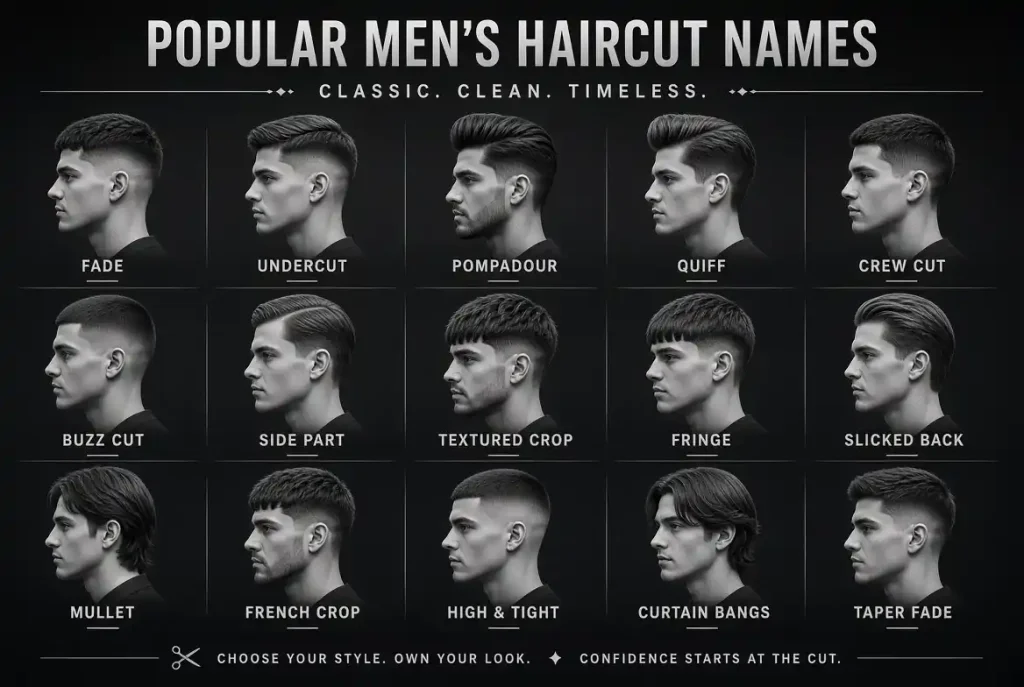

Haircut names for men include classic styles such as the crew cut and side part, modern looks such as the textured crop and wolf cut, and side treatments such as low fades and tapers. Understanding these names helps you choose a style and explain exactly what you want to your barber.
The easiest way to understand men’s haircuts is to divide them into three parts: the style on top, the cut on the sides and back, and the finishing details. Once you know these parts, you can combine them to create a look that suits your hair texture, preferred length, and daily routine.
1. Popular Short Haircut Names for Men
These styles are practical starting points if you prefer short hair and straightforward grooming.
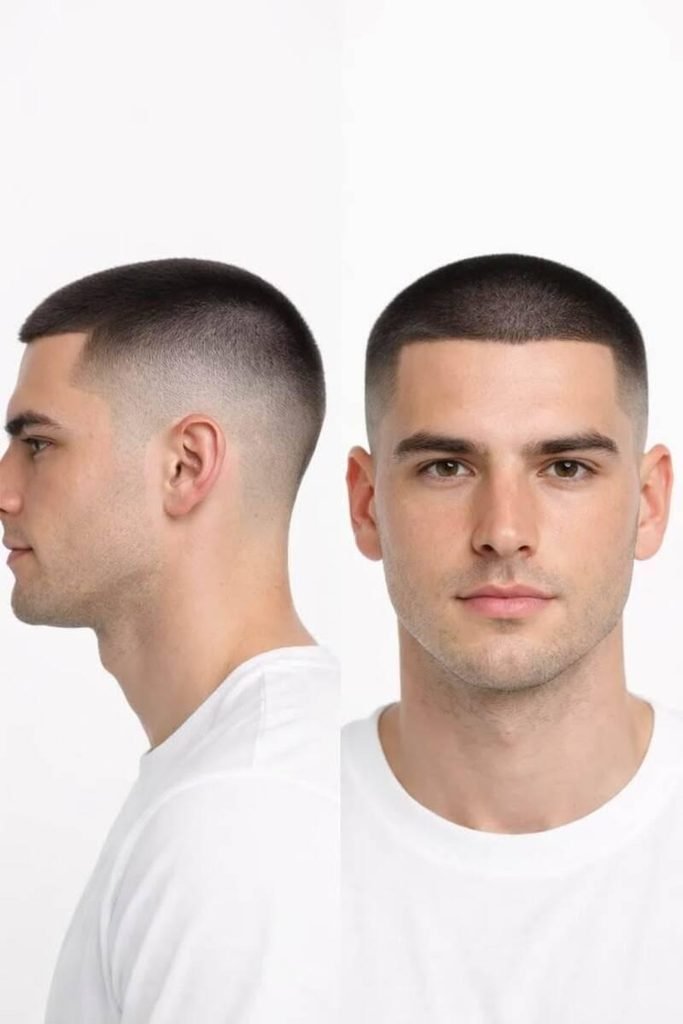
1. Buzz Cut
Hair is clipped very short, usually with a consistent length across the head or a slight difference between the top and sides.
Barber request: “Give me a short buzz cut with a neat neckline.”
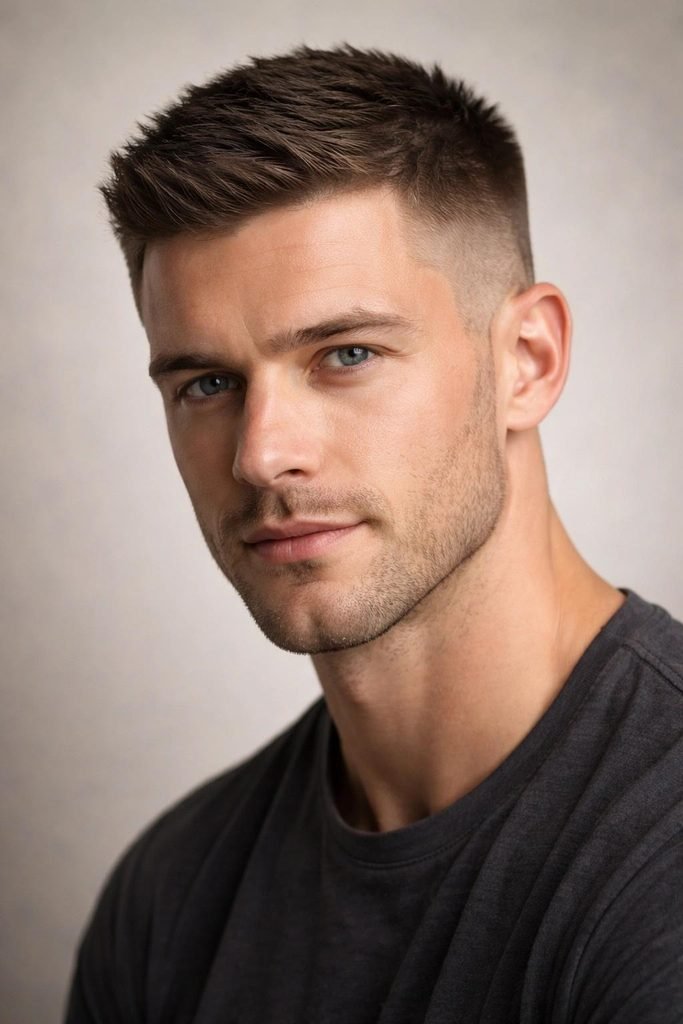
2. Crew Cut
The top is short but slightly longer toward the front, while the sides are usually tapered or clipped shorter.
Barber request: “A classic crew cut with a little extra length in front.”
3. French Crop
A short top is styled forward into a defined fringe, often with faded sides.
Barber request: “A French crop with a textured top and a short forward fringe.”
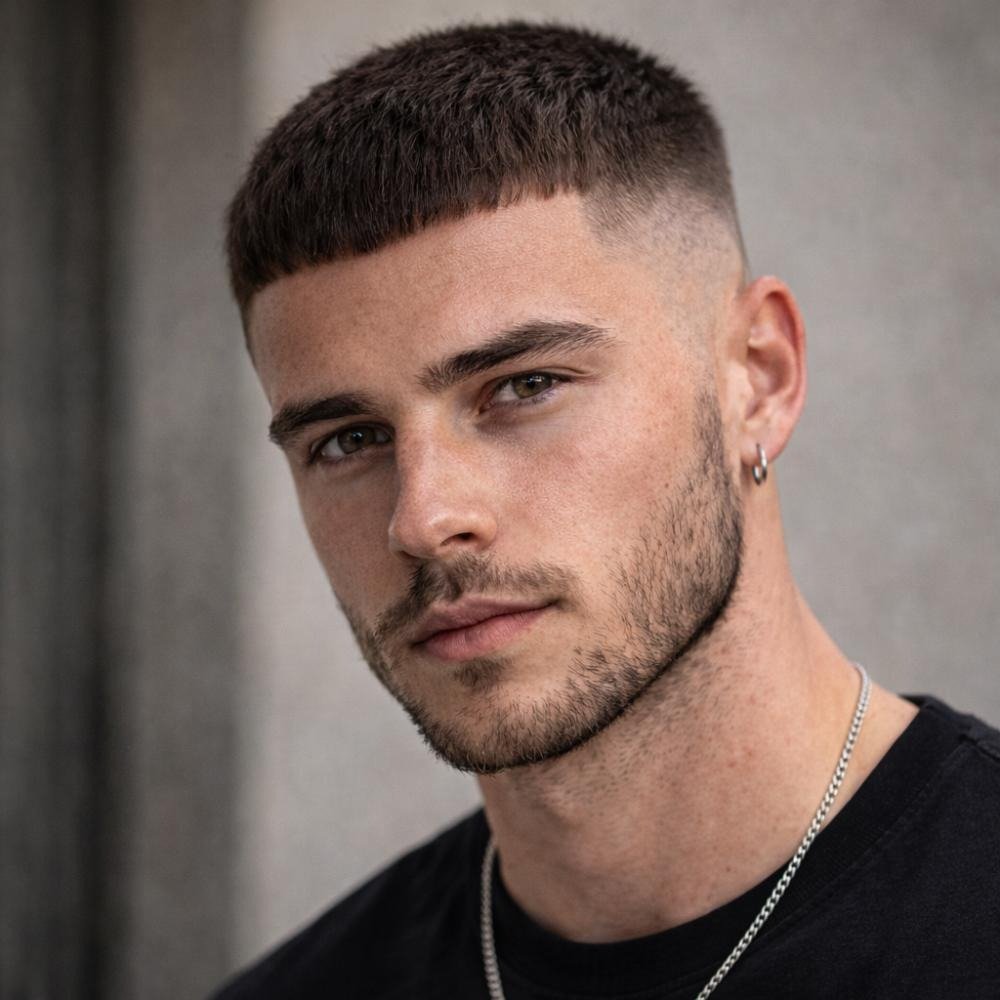
4. Caesar Cut
A short, fairly even top is brushed forward into a short fringe. The overall shape is compact and structured.
Barber request: “A short Caesar cut with a natural, forward fringe.”
5. Textured Crop
The top has separated, choppy sections rather than a smooth, uniform finish. It can be paired with a taper or fade.
Barber request: “Keep the top textured and the sides neatly blended.”
6. High and Tight
The sides and back are cut very short and high, leaving a small area of slightly longer hair on top.
Barber request: “A high and tight with very short sides and a short top.”
7. Ivy League
A longer variation of the crew cut with enough hair on top to create a side part or a small lift at the front.
Barber request: “An Ivy League cut with enough length to part the top.”
2. Fade Haircut Names for Men
A fade is a blending technique that gradually changes the hair from longer to shorter along the sides and back. The main difference between fade types is where the transition begins.
GQ
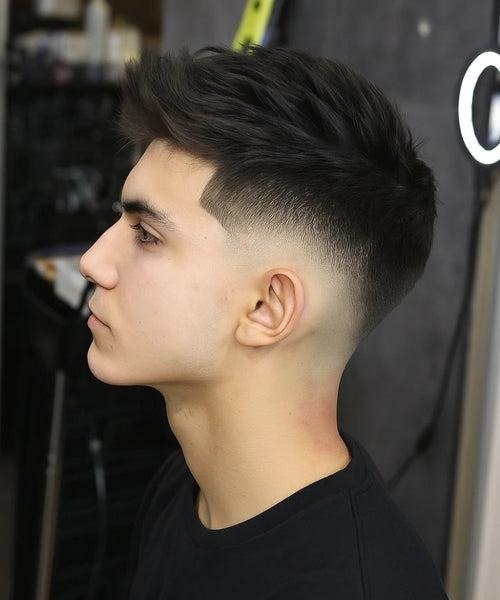
8. Low Fade
The blend begins close to the ears and neckline. It creates a relatively subtle transition.
9. Mid Fade
The blend starts around the middle of the sides, often near the temples. It offers a balance between subtle and dramatic contrast.
10. High Fade
The shorter section reaches higher up the head, producing a stronger contrast with the top.
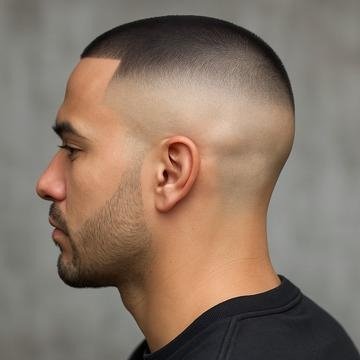
11. Skin Fade
The hair blends down to bare skin at the bottom. A skin fade can be low, mid, or high.
12. Drop Fade
The fade curves downward behind the ear, following the head’s shape rather than maintaining a level line.
13. Burst Fade
The blend curves around the ear and often leaves more length at the back. It is commonly combined with mohawks, curls, and mullets.
14. Temple Fade
The blending is concentrated around the temples and sideburns, leaving more of the rest of the sides untouched.
Which fade should you choose? Consider a low fade if you want a softer finish, a mid fade for a balanced look, or a high fade for stronger contrast. Skin, drop, burst, and temple fades describe additional features of the blend, so tell your barber exactly where you want the shortest area.
3. Taper Haircut Names for Men
A taper gradually shortens the hair around the edges, especially the sideburns and neckline. It can maintain more fullness on the sides than a fade that extends higher up the head.
- 15. Classic Taper: Shorter hair around the sideburns and neckline, with fuller sides above.
- 16. Low Taper: A subtle taper that keeps most of the sides relatively long.
- 17. Mid Taper: A more noticeable transition around the sides while retaining fullness higher up.
- 18. Taper Fade: A blended finish that gradually becomes shorter around the edges. The precise result depends on the barber’s terminology and technique.
A taper works with many top styles, including the crew cut, side part, curly top, and textured crop.
4. Classic and Professional Haircut Names
19. Side Part
Hair is divided to one side, creating a defined and often polished shape. It can be worn with a taper or low fade.
20. Comb Over
The longer hair on top is combed across to one side. It may look sleek or relaxed, depending on the styling.
21. Slick Back
Hair is combed backward from the forehead. Medium-length hair and a styling cream or pomade can help create the look.
22. Quiff
The front is lifted upward, often with a slight backward sweep. The result can be casual or neatly styled.
23. Pompadour
The front is raised and swept backward into a fuller shape. A traditional pompadour is usually more structured than a quiff.
24. Gentleman Haircut
A general label for a neat, tailored hairstyle, often featuring a side part, controlled length, and tapered edges. It is not one fixed haircut.
5. Modern and Trendy Haircut Names
These styles focus on texture, contrast, layers, or a distinctive silhouette.
| No. | Haircut name | What it looks like |
| 25 | Undercut | Short sides separated noticeably from a longer top. |
| 26 | Edgar Cut | A defined, often blunt fringe paired with short sides. |
| 27 | Curtains | Hair parted near the middle and fell toward both sides. |
| 28 | Faux Hawk | Hair styled toward the center without a traditional fully shaved mohawk shape. |
| 29 | Mohawk | A central strip of longer hair with much shorter or shaved sides. |
| 30 | Modern Mullet | Shorter front and sides with additional length at the back. |
| 31 | Wolf Cut | A shaggy, layered cut with volume around the crown and length toward the back. |
| 32 | Two-Block | A longer top sits over shorter sides and back, creating two distinct sections. |
| 33 | Spiky Haircut | Short or medium sections are styled upward into defined points. |
| 34 | Blowout | Hair is styled outward and upward to create volume around the top and sides. |
| 35 | Flat Top | The top is cut into a level, geometric shape. |
| 36 | Bowl Cut | The hair forms a rounded outline around the head, often with a fringe. |
A useful distinction: the undercut creates a stronger separation between the top and sides, while a fade gradually blends their lengths. Curtains describe how the hair is parted and worn, while a blowout describes a styling result. These terms are not all the same type of haircut label.
6. Haircuts for Curly, Wavy, and Coily Hair
The best starting point for textured hair is a cut that respects its natural curl pattern and shrinkage. Hair can look significantly shorter when dry than when stretched, so tell your barber how you usually wear it.
37. Curly Top Fade
Leaves curl longer on top while shortening the sides with a fade.
38. Afro
Shapes naturally coiled hair into a rounded or sculpted silhouette. It can be worn at different lengths.
39. High Top Fade
Keeps the top tall and shaped while the sides are faded.
40. Waves
Short hair is brushed into visible wave patterns. Achieving the pattern depends on hair texture and a consistent care routine, not just the haircut.
41. Curly Fringe
Natural curls fall forward over the forehead, often with shorter sides.
42. Bro Flow
Medium or longer hair is allowed to fall naturally, often swept back around the ears.
7. Medium and Long Haircut Names for Men
Longer styles offer more flexibility with layers, movement, and parting. They may require extra care while growing out and styling.
- 43. Long Layers: Different hair lengths create movement and reduce a heavy, one-length appearance.
- 44. Shag Haircut: A layered, textured style with a deliberately relaxed shape.
- 45. Man Bun: Long hair gathered into a bun at the back or crown.
- 46. Top Knot: Hair tied into a smaller knot near the top of the head, sometimes combined with an undercut.
- 47. Man Bob: A bob-style cut adapted for men, often worn around the ears, jaw, or neck.
- 48. Surfer Hair: A relaxed, often wavy style with natural-looking movement and medium or longer length.
- 49. Textured Fringe: A forward-facing fringe with separated sections rather than a smooth, uniform line.
- 50. Scissor Cut: A haircut shaped mainly with scissors rather than clipper guards. It describes a cutting method, not one particular hairstyle.
Important: A man bun and top knot are ways to wear long hair, while waves and a scissor cut describe a styling result or cutting method. They are useful hairstyle terms, but they do not describe the same thing as a crew cut or fade.
8. Fade vs. Taper vs. Undercut: What’s the Difference?
These three terms are often confused because they all describe how the sides and back are cut.
10
| Feature | Fade | Taper | Undercut |
| Main feature | Gradual blending over the sides and back | Shortening concentrated around the edges | Strong separation between top and sides |
| Typical appearance | Blended transition | Natural, neat outline | Noticeable contrast |
| Customization | Low, mid, high, skin, drop, burst | Classic, low, mid | Disconnected or blended variations |
| Common combinations | Crop, quiff, curly top | Crew cut, side part, curls | Slick back, longer top, two-block variations |
A fade and taper can overlap in how barbers use the terms. If you want a subtle finish, ask for a classic taper around the sideburns and neckline. If you want the blending to extend higher up the sides, explain the fade height you prefer.
GQ
+1
9. Clipper Guard Numbers Explained
Clipper guards help you communicate how much hair should remain. The following are common approximate lengths; individual clipper systems can differ.
| Guard number | Approximate length left |
| No. 0 | Depends on the clipper or attachment; may mean no guard |
| No. 1 | 3 mm |
| No. 2 | 6 mm |
| No. 3 | 10 mm |
| No. 4 | 13 mm |
| No. 5 | 16 mm |
| No. 6 | 19 mm |
| No. 8 | 25 mm |
Approximate conversions based on common clipper guard measurements. Confirm the exact length with your barber and clipper manufacturer.
menhaircuts.net
Three things to remember:
- A guard number tells you the approximate length left by the clipper, not the height of a fade.
- The hair on top is often cut with scissors, so guard numbers may not apply.
- Curly or coily hair can appear shorter because it contracts into its natural shape.
For example, “a No. 2 on the sides with about two inches on top” gives your barber more information than simply asking for a short haircut.
10. How to Choose a Haircut for Your Hair Type and Routine
Use this table as a starting point, then adjust the choice according to your preferences.
| Your hair or preference | Styles to consider | What to discuss |
| Straight hair | Side part, Ivy League, curtains | Whether you want a smooth or textured finish |
| Wavy hair | Bro flow, wolf cut, textured crop | How much natural movement to preserve |
| Curly hair | Curly top fade, curly fringe, layered cut | Curl shrinkage and the shape when dry |
| Coily hair | Afro, high top fade, waves | Natural texture, shape, and preferred length |
| Thick hair | Textured crop, quiff, layers | Whether to remove bulk or retain volume |
| Fine or thinning hair | Crew cut, buzz cut, Caesar | Hairline, scalp visibility, and desired coverage |
| Minimal daily styling | Buzz cut, crew cut | How short you want the haircut and how often to refresh it |
| Longer hair | Bro flow, man bun, long layers | Growing time, maintenance, and styling preferences |
No haircut is automatically right for a particular face or hair type. These are starting suggestions, not guarantees.
How much maintenance will you need?
It helps to separate two kinds of maintenance: daily styling and how often you need a fresh cut.
| Style | Daily styling | Typical refresh range |
| Buzz cut | Very low | About 2–4 weeks |
| Crew cut | Low | About 3–5 weeks |
| Skin fade | Low to moderate | About 1–3 weeks |
| Textured crop | Low to moderate | About 3–5 weeks |
| Side part | Moderate | About 3–6 weeks |
| Quiff or pompadour | Moderate to high | About 3–6 weeks |
| Long layers or bro flow | Depends on length and texture | About 6–12 weeks |
These are planning estimates, not fixed schedules. Hair growth, the precision you want, and your styling habits can change how often you need a trim.
11. The 15 Best Haircut Names for Men
If you do not want to compare all 50 styles, start with these 15. They cover a useful mix of short, classic, modern, and longer looks.
| Haircut | Why consider it |
| Buzz cut | Simple daily grooming |
| Crew cut | Classic and practical |
| Low taper | Subtle, neat edges |
| Mid fade | Balanced contrast |
| French crop | Short forward fringe |
| Textured crop | Movement on top |
| Ivy League | Smart, side-parted look |
| Side part | Traditional and versatile |
| Quiff | Lift and volume at the front |
| Pompadour | A fuller, structured top |
| Undercut | Strong contrast |
| Curtains | Middle-parted medium hair |
| Two-block | Longer top with shorter sides |
| Curly top fade | Natural curls with shorter sides |
| Bro flow | Relaxed medium or long hair |
How to narrow your choice: Pick a crew cut or buzz cut if you want short hair with little daily styling. Consider a low taper or Ivy League if you prefer a neat, classic appearance. Choose a textured crop for a choppy finish, or curtains and a bro flow if you want to retain more length.
12. What to Tell Your Barber
The most reliable way to communicate a haircut is to describe the sides, top, finish, and length. A reference photo can help because haircut names sometimes mean different things to different barbers.
menhaircuts.net
+1
Here are three requests you can adapt.
For a clean, low-maintenance haircut
“I’d like a crew cut with short sides and a little more length at the front. Keep the finish natural and make sure the neckline is neat.”
Copy barber request
For a modern fade
“I’d like a mid fade with a textured crop on top. Keep the fringe short and textured, and blend the sides smoothly. Please confirm the guard length before cutting.”
Copy barber request
For a natural, longer style
“I’d like to keep the length on top and around the back. Please add layers for movement, tidy the edges, and avoid cutting the sides too short.”
Copy barber request
Before the haircut begins, show your barber a photo and explain what you want to keep. If you are unsure about a guard number, ask for the longer option first and agree on the length together.
Frequently Asked Questions
1. What are the most common haircut names for men?
Common haircut names include the buzz cut, crew cut, French crop, textured crop, side part, quiff, pompadour, undercut, low fade, mid fade, and taper. These styles differ in top length, side blending, and overall shape.
2. What is the difference between a haircut and a hairstyle?
A haircut describes how the hair is cut and shaped. A hairstyle can also describe how the hair is arranged or styled afterward. For example, a slick back describes hair combed backward, while a man bun describes long hair tied into a bun.
3. Which men’s haircut is easiest to maintain?
A buzz cut is one of the simplest styles to maintain because it needs little daily styling. A crew cut is another practical option. Very short fades may need more frequent barber visits to keep their edges crisp.
4. What is the difference between a low fade and a mid fade?
A low fade begins close to the ears and neckline. A mid fade begins higher, around the middle of the sides, often near the temples. The higher starting point generally creates more visible contrast.
5. What does a No. 2 haircut mean?
A No. 2 clipper guard usually leaves approximately 6 mm of hair. It is commonly used for short sides, but the final result depends on the clipper, hair texture, and how the barber blends the sections.
6. Which haircut works well for curly hair?
A curly top fade, curly fringe, tapered curls, afro, or longer layered cut may work well. The right choice depends on your curl pattern, density, shrinkage, and how much length you want to keep.
7. How do I choose a haircut for my face shape?
Face shape can guide your choice, but it should not determine it. Consider the length you prefer, natural hair texture, hairline, and styling routine. A reference photo and a conversation with your barber can help you adapt a style to your features.
8. How often should men get a haircut?
Many short styles benefit from a trim every two to five weeks, while longer hairstyles can often go six to twelve weeks between trims. Your preferred finish and how quickly your hair grows will influence the schedule.
Conclusion
Knowing haircut names for men makes it easier to explore different styles and communicate with your barber. From the buzz cut and crew cut to fades, tapers, textured crops, curls, and longer hairstyles, each option offers a different balance of shape, length, and maintenance.
Start by deciding how short you want the sides and how much length you want on top. Then consider your natural hair texture and the time you want to spend styling it. Remember that a fade is a blending technique, a taper focuses on the edges, and many top styles can be paired with either.
Before your next appointment, save a reference photo and describe the length, finish, and areas you want to keep. That simple preparation can help you get a haircut that suits your preferences and everyday routine.

PressoraMedia is a content platform dedicated to helping readers find the right words, names, meanings, and ideas for everyday use. Our content focuses on names, name meanings, naming inspiration, and useful language-related information in a simple and easy-to-understand format. At Pressora Media, we believe that choosing a name is more than simply finding a word. A name can carry meaning, personality, culture, and a special story. That is why we research names carefully and create helpful guides designed to make the naming process easier. Our authors and contributors focus on providing clear explanations, useful name suggestions, meanings, origins, pronunciations, and practical naming ideas. We aim to keep our content informative, reader-friendly, and genuinely useful. Whether you are searching for a meaningful name, exploring the origin of a name, looking for unique naming ideas, or simply curious about the meaning behind a word or name, Pressora Media is here to help.
Pressora Media Team
Helping you find the right name, meaning, and words.